5th Grade Life Science: Physical and Behavioral Adaptations

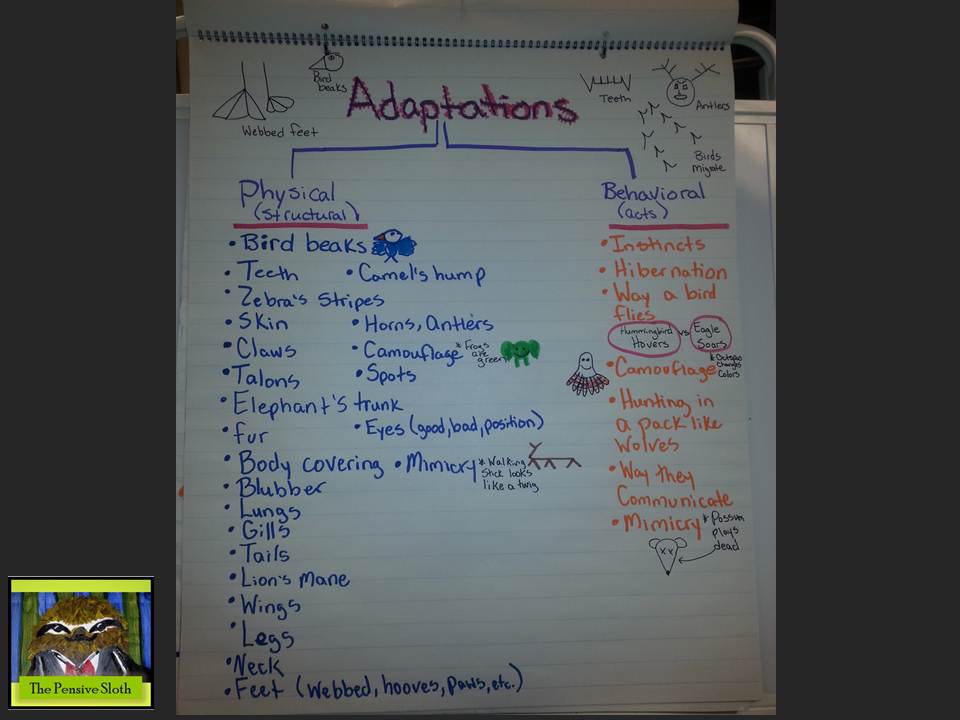
We are in full life science mode right now and spent the last few days learning about adaptations.  Students made vocabulary foldables for new words and we sorted adaptations into physical (structural) and behavioral categories using a tree map.

To show what they have learned, students are inventing an animal!  I’m super excited about this ‘Invent an Animal’ project and so are they.  I’ve given them each the description of an imaginary habitat and they have to invent an animal with specific adaptations for surviving in this environment.  I’ll come back and let you know how it all worked out!

Glad you stopped in!

–The Pensive Sloth

@thepensivesloth 5th grade life science adaptations anchor chart

Tree map sorting adaptations into two categories.

@thepensivesloth 5th Grade Animal Adaptations Vocabulary

Our adaptations word wall– I’m trying something new with my word walls so that they are portable and content specific rather than alphabetical. Students made foldables of these words by defining them in their own words and drawing a picture. We will add the foldables to our science notebooks.

My Favorite Things: Tiny Storage Baggies

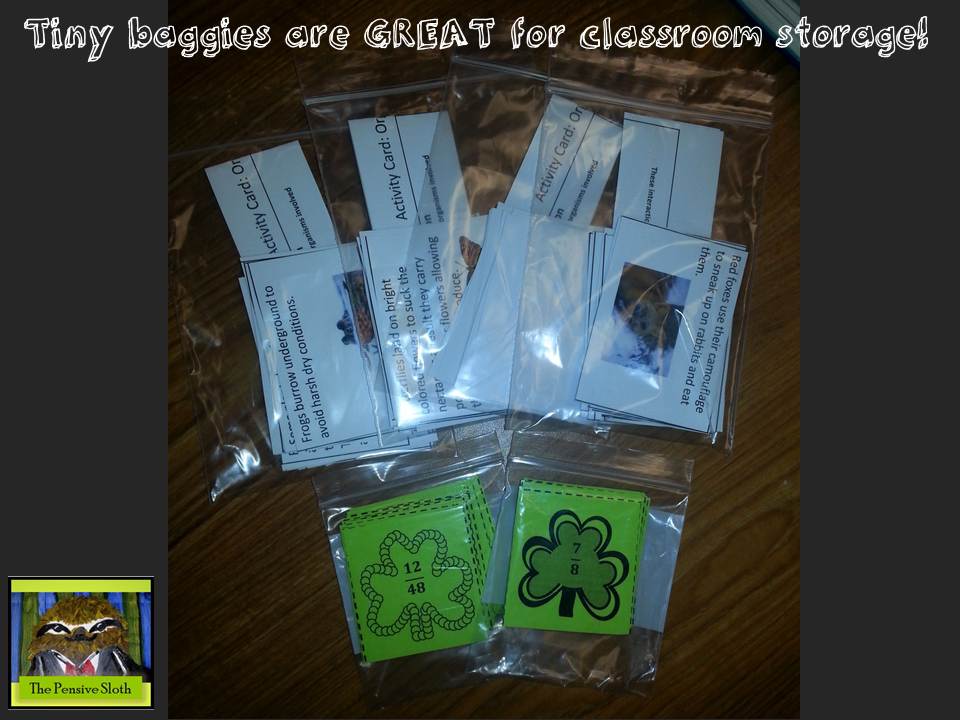
Did you know that they make tiny storage bags?  Well, they do and they are perfect for all of those laminated cardstock pieces you spent hours cutting out.

These baggies are about 2 X 3 ish and are perfect for a fraction sort game I made for my kiddos.  I think I paid $4.00 for a pack of 100.   Great for centers and stations in the classroom!

These baggies are about 2 X 3 ish and are perfect for a fraction sort game I made for my kiddos. I think I paid $4.00 for a pack of 100. Great for centers and stations in the classroom!

I discovered these earlier in the year when I was picking up craft supplies for our holiday ornaments and needed something for storing sequins.  It dawned on me that these would be perfect for our science and math sorts and cutups…so I bought a few.  They are the bombdiggity because:

1–They don’t take up much space.  I hate putting cards in baggies that are too big.  They flop around, get bent up, and storing a few sets takes up more space than it should.

2–They are cute.  I’m not much for cute most days, but I do find these tiny little bags to be quite adorable!

3–They are cheap and easy to find.  You can get about 100 of them for less than $5.00 at most craft stores.  I usually shop Hobby Lobby, but Michaels and Jo-Ann Fabrics probably sell them, too.

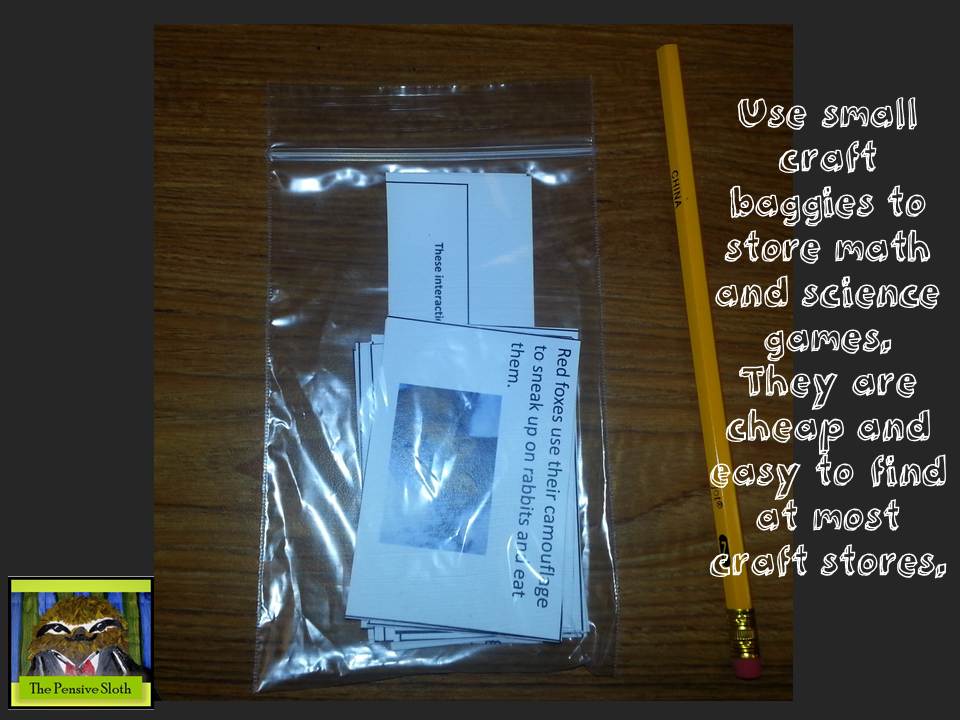
@thepensivesloth small ziplock baggies for storing classroom games

I placed them next to a pencil so you could see the approximate size. I think these are about 4 X 6. Because the cards don’t have lots of room to ‘swim’ around in the bag, they seem to last longer without getting bent up.

@thepensivesloth mini storage bags for classroom stations and centers

Seriously. You have to try these! My next project is to organize my games into a binder and these will fit perfectly…Perhaps this summer?

These are a MUST HAVE if you use teacher-made materials, centers, or stations in your classroom or if you are a Teachers Pay Teachers junkie like me!


–The Pensive Sloth


@thepensivesloth Darkling Beetles Mealworms Pupa insect life cycle

UPDATE–We’re Still Infested!

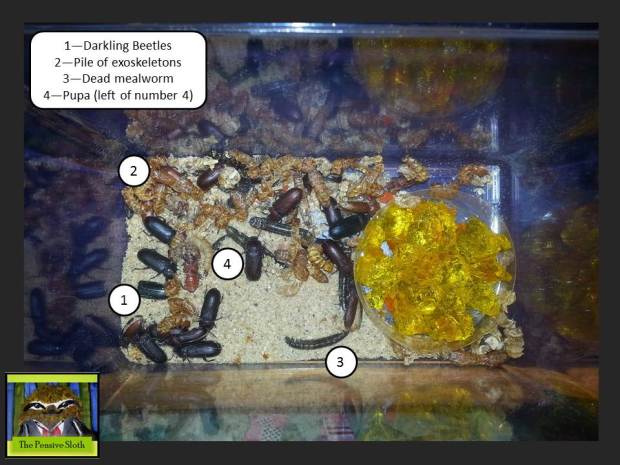
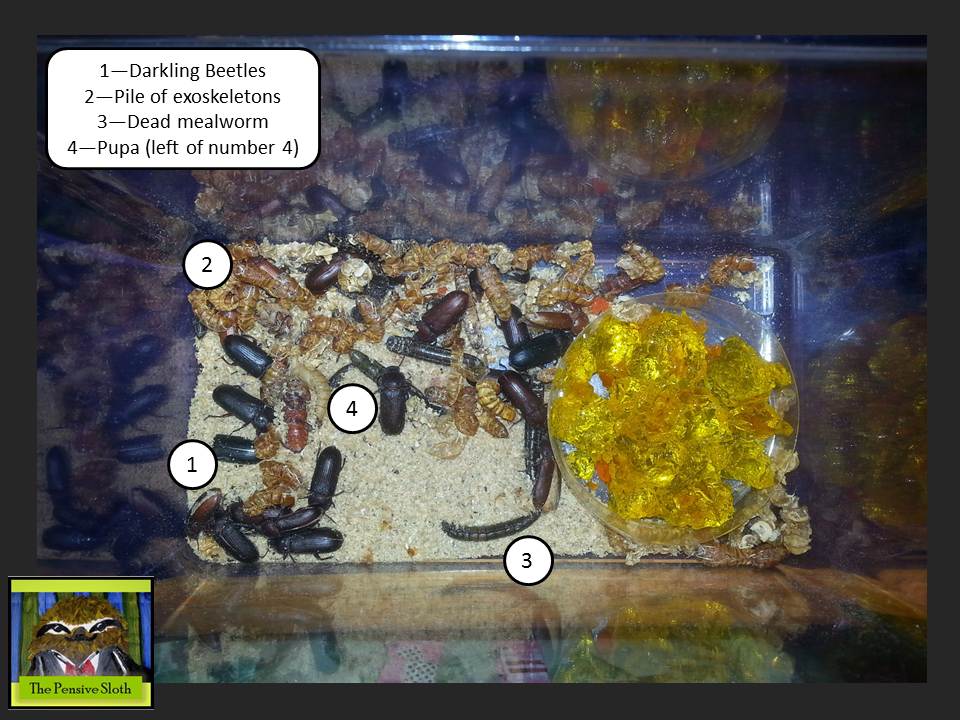
This will be short, but I wanted to send an update about how our mealworms have become Darkling Beetles.  They started emerging from their pupal stage on Monday, March 31, and most were a very light brown.  I think we only have one pupa left, all others have emerged and turned black.  I was under the impression that they ate their exoskeletons.  I guess not because there are TONS of exoskeletons in the cage.  There are still a few dead mealworms that I need to remove, which could be contributing to a strange odor, but with STAAR testing it has been super busy and all of our critters have been locked in a cabinet since Monday afternoon.  They were released from the cabinet today to pose for these pictures!  To read about our full insect zoo, click here.

@thepensivesloth Darkling Beetles Mealworms Pupa insect life cycle

I numbered the photo so that it would be easier to see what is what.

@thepensivesloth insect life cycle mealworms darkling beetles pupa larvae

Here’s a side view. The beetles are fairly active, but clumsy and slow. The kids had a great time watching them emerge on Monday. Very memorable!

I also bought some Flightless Fruit Flies to add to our classroom insect zoo.  Who knew there was such a thing?  And, shouldn’t they be called Flightless Fruit Bugs since they can’t fly?  I haven’t opened the container to see if they really are flightless because they appear to have fully functioning wings and I don’t care to find out yet.  We will open them when our Praying Mantises hatch.  These little Flightless Fruit Flies are thoroughly disgusting, so your students would love them!  You can buy them in a vial at Petsmart or Petco for about $5.99.  I think they last a few weeks which is about how long we have had them.  They come in a small, clear cylinder which is perfect for passing around.  What’s great about them is that you can see the larva growing as the maggots inch around, you can see some pupa that look like little Cumin spice seeds, and the adult flies crawling around near the top.  I’ve heard you can put them in a new container with a piece of rotten fruit and keep the colony going on forever.  Not so sure about that one.  Hopefully the Mantises will finish them off…but what will I do with the larvae?  Anyway…the kids had a great time being grossed out!

Flightless Fruit Flies Classroom Insect Zoo metamorphosis insect life cycles

These are Flightless Fruit Flies. They are perfect for learning about complete and incomplete metamorphosis. The blue stuff at the bottom must be food, the red in the middle is some kind of net for them to crawl around, and the little white things…those are maggots (fruit fly larvae). Gross!

Funny story–I almost killed the flies.  I left them in the car overnight so I wouldn’t forget them the next day.  As is typical for Texas, the temperature went from a warm 70 something to freezing overnight.  When I found them in the car that morning, nothing was moving.  Nada.  I set them in a desk drawer at school and they started moving about.  I guess they didn’t get too cold!  Whew!


–The Pensive Sloth


PS–If you are looking for an activity to review complete and incomplete metamorphosis, look no further!  Check out this insect life cycle sort.  Perfect for reviewing before the science STAAR test.

Insect Life Cycle Sort for Complete and Incomplete Metamorphosis

Click the picture to see this in my TPT store. Great STAAR review!


My Many Anchor Charts Monday

Here’s a quick photo post about what has been happening in my classroom the last few weeks!

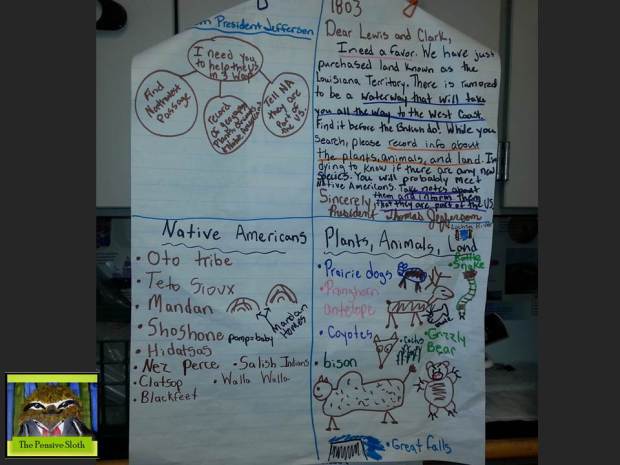
We read a book about the Lewis and Clark expedition then made a diagram to show Thomas Jefferson's goals for the expedition.  As a class, we did a shared writing exercise turning our diagram into a letter to TJ!  As we read, we kept a record of the animals, plants, land, water, and Indian tribes we encountered.  AND we drew pictures!  I hope you like my bison and grizzly bear.  Have I mentioned that I was not blessed with artistic talents???

We read a book about the Lewis and Clark expedition then made a diagram to show Thomas Jefferson’s goals for the expedition. As a class, we did a shared writing exercise turning our diagram into a letter to TJ! As we read, we kept a record of the animals, plants, land, water, and Indian tribes we encountered. AND we drew pictures! I hope you like my bison and grizzly bear. Have I mentioned that I was not blessed with artistic talents??? Want you kids to LOVE learning about Lewis and Clark, click the picture for a rockin’ rap about Lewis and Clark.

Students researched different territories acquired by the US in the 19th century and presented their reports to the class while I recorded their findings.  Fun!  We learned about the Oregon Country, Mexican Cession, Gadsden Purchase, Florida Acquisition, Louisiana Purchase, Texas Annexation, and what the US was like in 1783.

Students researched different territories acquired by the US in the 19th century and presented their reports to the class while I recorded their findings. Fun! We learned about the Oregon Country, Mexican Cession, Gadsden Purchase, Florida Acquisition, Louisiana Purchase, Texas Annexation, and what the US was like in 1783.

Text structure/organization anchor chart to help students understand how authors communicate relationships between ideas.

Text structure/organization anchor chart to help students understand how authors communicate relationships between ideas.

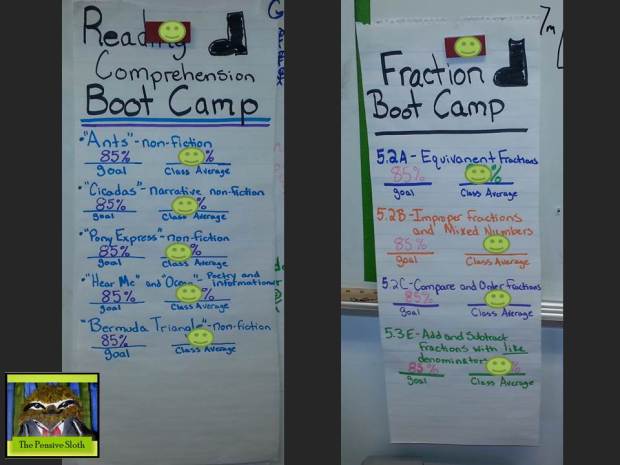
I wrote about Fraction Boot Camp in another post if you want to learn more.  As a class we set goals for common assessments and chart our progress.  When we do really well we have a picnic lunch outside.  I used smiley faces to cover up class averages.  Great activity as you prepare for state testing (STAAR).  It certainly helps with motivation!

I wrote about Fraction Boot Camp in another post. Click the picture if you want to learn more.  As a class we set goals for common assessments and chart our progress. When we do really well we have a picnic lunch outside. I used smiley faces to cover up class averages. Great activity as you prepare for state testing (STAAR). It certainly helps with motivation!

Anchor chart showing incomplete and complete metamorphosis.  Want to see our metamorphosis lab in action?  Check out the post on our Insect Zoo.

Anchor chart showing incomplete and complete metamorphosis. Want to see our metamorphosis lab in action? Click this picture to read a post on our Insect Zoo!

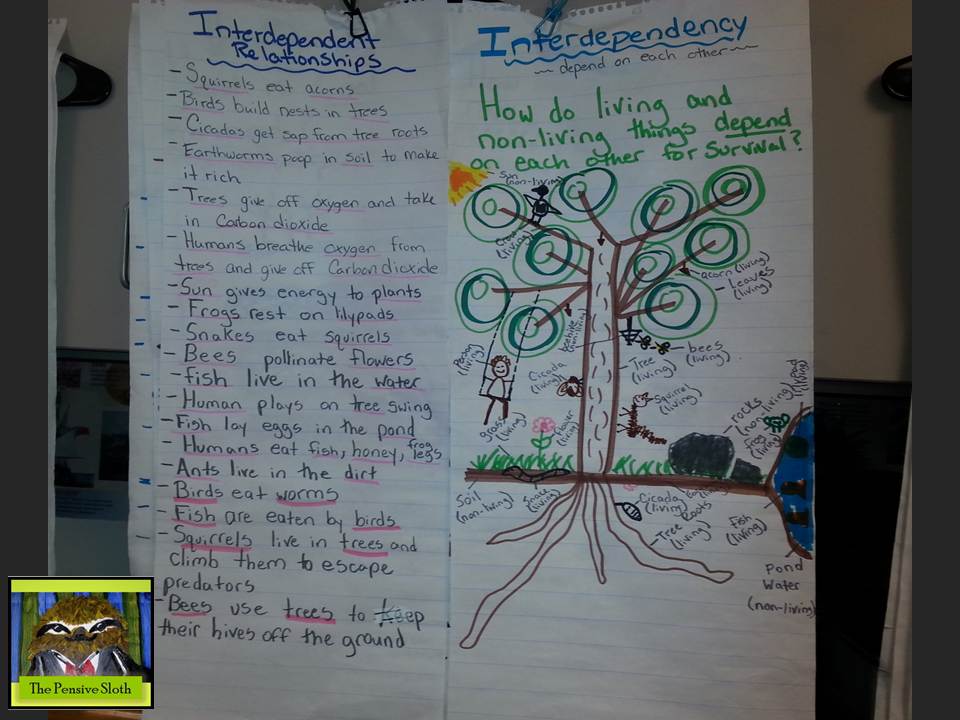
We had a great time launching the interdependency lesson.  Students brainstormed living and non-living things in a park environment and illustrated and wrote about how everything was connected, or interdependent on each other for survival.  Once again, feel free to giggle at my artwork!  I certainly do...but I have fun drawing!

We had a great time launching the interdependency lesson. Students brainstormed living and non-living things in a park environment and illustrated and wrote about how everything was connected, or interdependent on each other for survival. Once again, feel free to giggle at my artwork! I certainly do…but I have fun drawing!

Infested: All About Our Classroom Insect Zoo

Our Insect Zoo--We are studying complete and incomplete metamorphosis.  Which insects undergo complete metamorphosis?  Incomplete metamorphosis?

Our Insect Zoo–We are studying complete and incomplete metamorphosis. Which insects undergo complete metamorphosis? Incomplete metamorphosis?

One of our state standards for 5th grade life science is insect life cycles.  Students are expected to describe the differences between incomplete and complete metamorphosis.  What better way to do this than by watching it happen in real time!  So, we have created an insect zoo in our classroom.  You can do it too!  Here are our inhabitants.

Madagascar Hissing Cockroaches–These little guys are awesome.  The kids can handle them, they are hardy (so if you forget to feed them for a day or week then they are fine), and there are so many concepts you can teach!  I partner students up and give each pair an adult roach in a plastic tub to touch and observe.  They love this!  There is usually some screaming and jumping back at first, but they really bond with the little roaches and start naming them by the end of the lesson.  I had students sketch and label what they observed and write down questions to look up later and let me tell you, they did some serious Googling!  There is nothing like seeing a kiddo truly engaged and searching to find out answers to their own questions.  We always hold a debrief session and meet together on the rug to record what we have learned, especially new vocabulary.  Oh, and these guys go through INCOMPLETE METAMORPHOSIS.

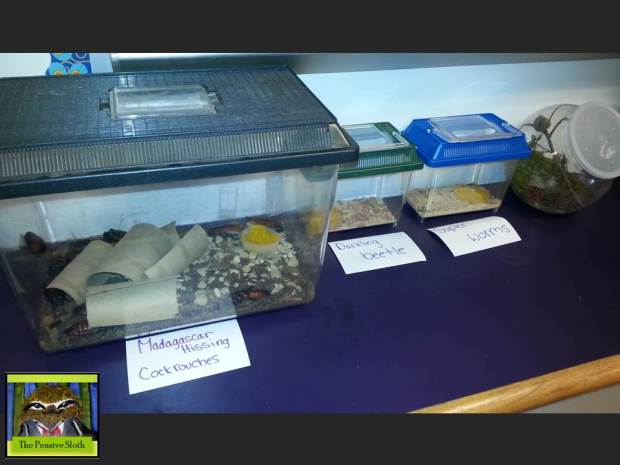
This is our hissing cockroach tank. The babies (nymphs) only escape every now and then...

This is our hissing cockroach tank. The babies (nymphs) only escape every now and then…

There are a few nymphs, or babies, on the underside of the toilet paper tube. There are lots more nymphs under the other tubes!
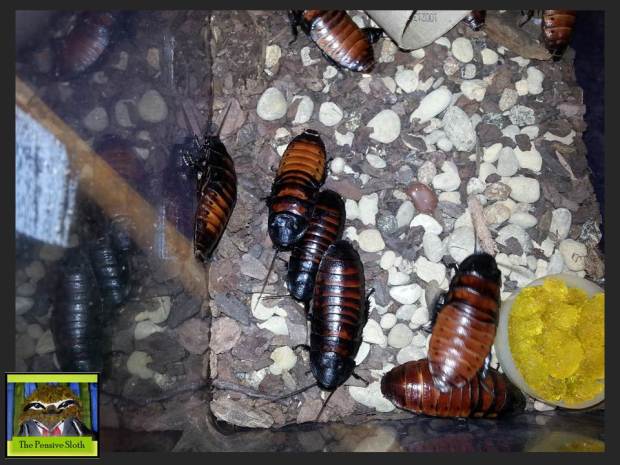
There are a few nymphs, or babies, on the underside of the toilet paper tube. There are lots more nymphs under the other tubes!

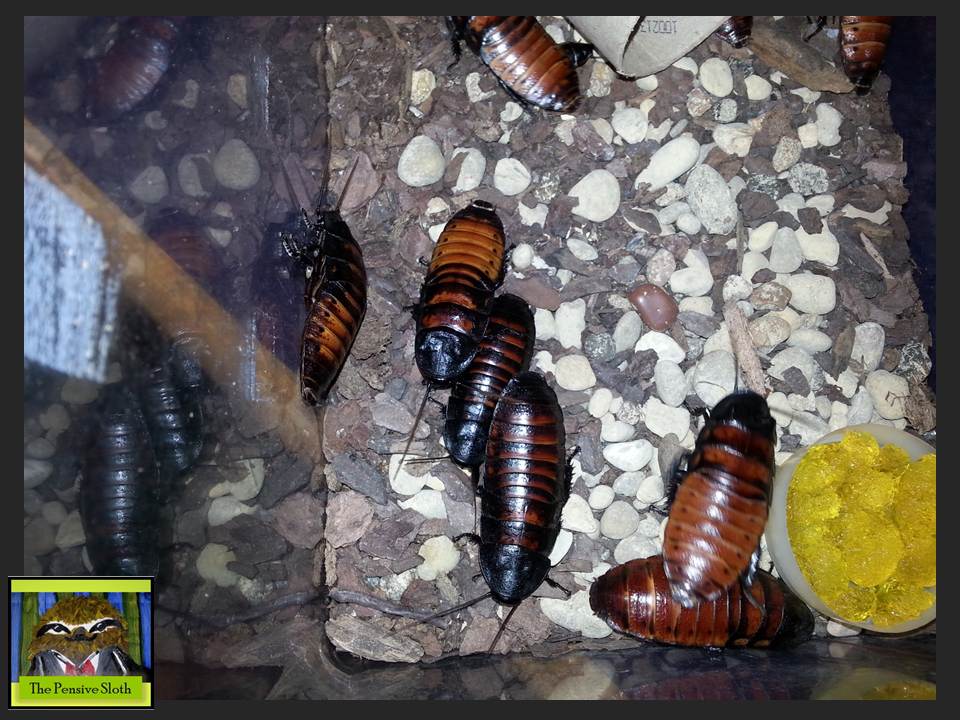
Here are our hissing cockroach pets from the top. These are adults. That yellow stuff in the corner is Cricket Quencher and is an easy way to provide water for cockroaches. They drown in water dishes that are too deep!

Here are our hissing cockroach pets from the top. These are adults. That yellow stuff in the corner is Cricket Quencher and is an easy way to provide water for cockroaches. They drown in water dishes that are too deep!

Darkling Beetles (AKA Mealworms)--I’m a little grossed out by these little guys in their pupal state, but these insects are a perfect example of COMPLETE metamorphosis.  You can pick up mealworms at some bait shops or pet stores.  I got mine at Petsmart.  They are super cheap and easy to care for.  They recommend oatmeal for them to munch and crawl around in.  You should also provide a slice of potato every other day for water and extra carbs!  Mealworms don’t watch their weight.  Their goal, like all larva, is to pump up…to get fat!  Anyway, with these guys your students will be able to see the larva, pupa, and adults.  I’ve never seen an egg because they are so small.  Mealworms are safe for students to handle in their larval state.  We try not to disturb them when they are pupa just in case that would prevent them from making it to the adult stage.

Our mealworms chillin' in their tank

Our mealworms chillin’ in their tank

You can see two stages in this picture, the long brown guys are the larva, the off white guys are the pupa.  You can see a really white pupa in the middle.  He just shed his exoskeleton that afternoon!

You can see two stages in this picture, the long brown guys are the larva, the off white guys are the pupa. You can see a really white pupa in the middle. He just shed his exoskeleton that afternoon!  The dark brown worms didn’t make it…funeral arrangements have not been planned yet. 🙂

Here's a view from the front of the pupa and larva.  Darkling beetles will emerge soon...

Here’s a view from the front of the pupa and larva. Darkling beetles will emerge soon…The yellow Cricket Quencher isn’t necessary right now because the pupa don’t eat or drink.  There were a few larva left, so I put it in for them.  We were all out of potatoes!

Superworms–This is my first year working with Superworms, but I wanted to have 2 examples of COMPLETE METAMORPHOSIS for my students so I discovered the Superworm.  I always thought that they were just big mealworms.  They aren’t.  They are a species like the mealworm, but these guys are not safe for students to handle because they can pinch with their mouths.  Superworms are bigger and a lot more active than mealworms.  Also, you can’t refrigerate them.  You may wonder “Why would I refrigerate worms?”  Well, if you put mealworms in the fridge they will go into an dormant state for a while and won’t pupate.  If you put Superworms in the fridge, they die.  Superworms are slightly more fun to observe because they do wiggle more.  You care for them in about the same way.  Oatmeal and potatoes.  Boy can they eat a potato!  In just a day there will be holes all in  your potato slice.  What is REALLY cool about Superworms is that they won’t pupate unless isolated.  What this means is that you have to separate each into a little container so that there is no food, water, or movement around it.  Only then will it begin to pupate.  Like I said, this is a first for me.  We haven’t isolated them yet, but I think I will use a fishing lure box or craft storage box.  I’ve heard that they will eat right out of egg cartons!  I’ll post pictures when they start to pupate.

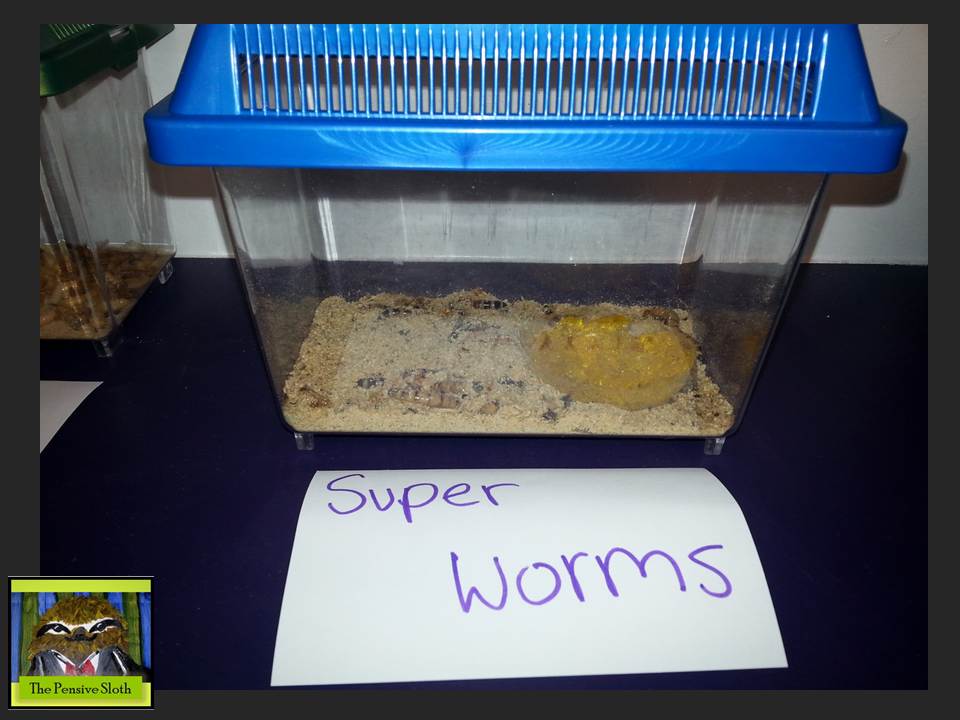
Here are our Superworms!

Here are our Superworms!

Here you can see a bunch of the little guys.  I had to wiggle the tank to get them to come to the top.

Here you can see a bunch of the little guys. I had to wiggle the tank to get them to come to the top.  The yellow stuff is the Cricket Quencher.  It isn’t necessary if you add a potato or moist fruit each day, but I was all out of potatoes and fruit.

Superworms--larva of a beetle, though I don't remember what kind.  Fun!

Superworms–larva of a beetle, though I don’t remember what kind. Fun!

Praying Mantis–If you want to teach your students about cannibalism, then these are the guys to help you do it!  Actually, I don’t think any of us plan to do that, but that is exactly what happens when the nymphs emerge if you don’t feed them.  The Praying Mantis is a great example of INCOMPLETE METAMORPHOSIS.  They hatch from an egg case as tiny nymphs and almost immediately start hunting.  No fruit flies?  That’s ok.  I’ll eat my siblings.  It is truly survival of the fittest.  We will feed these guys fruit flies and watch them grow!  I’ll post more pictures as they do.  You can order a Praying Mantis egg case online.  Ours came set up in their habitat already!  I don’t think the students have a grasp on how many will emerge from the egg case.  We are planning to grow our own fruit flies as food, so watch for a post on that soon.  I love science!!!

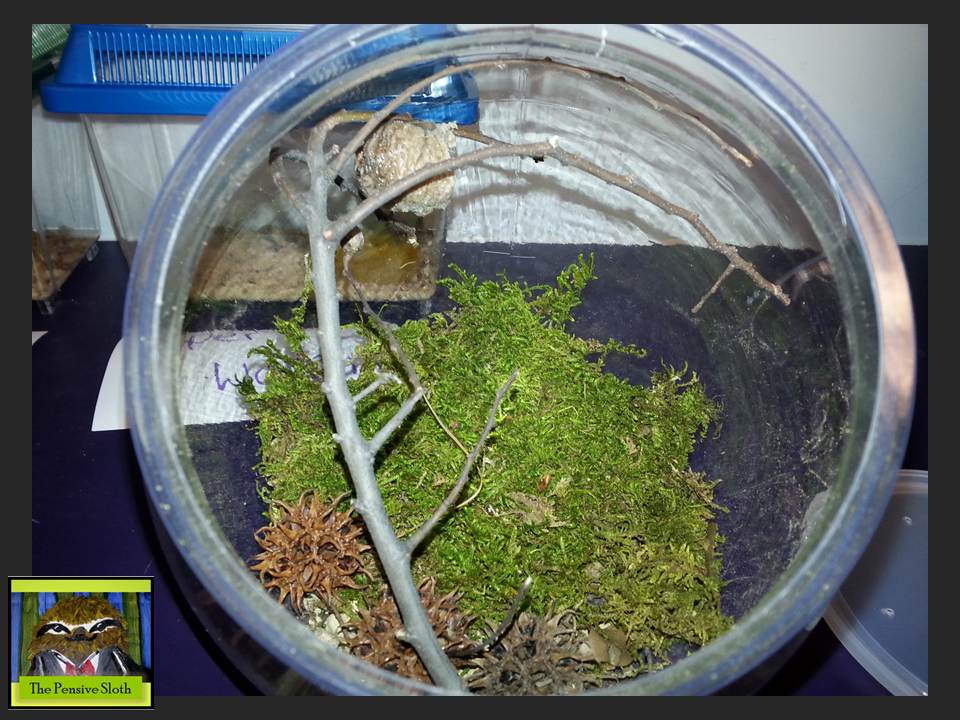
If you look closely you can see the egg case on the branch in the top left corner.  I wonder how many little insects are in there?

If you look closely you can see the egg case on the branch in the top left corner. I wonder how many little insects are in there?
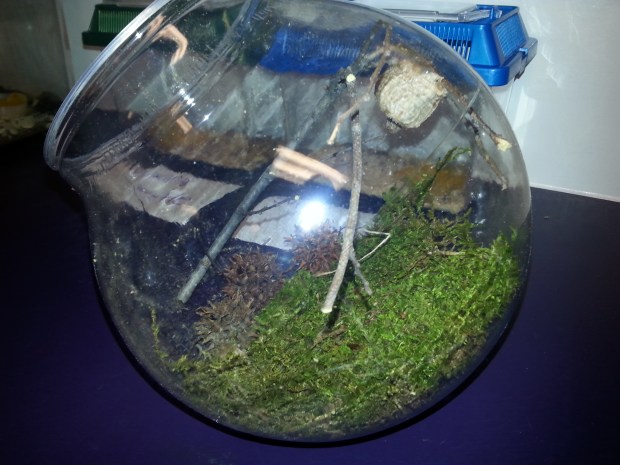
Is the plural of mantis mantids or mantises???  You can see the egg case in the top right corner hanging off the branch.  We can't wait for the nymphs to come out!

Is the plural of mantis mantids or mantises??? You can see the egg case in the top right corner hanging off the branch. We can’t wait for the nymphs to come out!

Thanks for stopping by…follow this blog for updates on our insect zoo!

–The Pensive Sloth
Use MUSIC to Teach Your 5th Graders About the Bill of Rights

I love teaching social studies, especially American history.  I think it is important that children learn about America’s past and what makes this such an exceptional country!  And learning history should be FUN!  Around the middle of the year we begin studying the Constitution and US government.  My kiddos usually get a pretty good grasp on the 3 branches, but the Bill of Rights can be a challenge to teach.  Here’s some fun resources for making the Bill of Rights come alive for your students.

  • The Bill of Your Rights Rap on YouTube–A quick, summarized version of the first 10 amendments set to a catchy tune.

  • Bill of Rights Word Wall/Anchor Chart–I often make what I call focused word walls.  I’ve never been able to get the alphabetical ones to work for me, plus with teaching all subjects I run out of room quickly.  When I make word walls for science and social studies they are topic specific, so as we learned about the Bill of Rights we added our own definitions to the chart.
Our Bill of Rights word wall/anchor chart.  Very helpful to understand the language of the Bill of Rights.

Our Bill of Rights word wall/anchor chart. Very helpful to understand the language of the Bill of Rights.

  • “We Shall Be Free” Song by Garth Brooks–I love Garth Brooks and there are a few of his songs that I use in history class.  One of my favorites is “We Shall Be Free.”  I usually use this as an integrated LA/SS lesson where students make connections between a printed copy of the actual Bill of Rights and the lyrics of the song.  We listen to the song a few times and then kiddos work in small groups to make text to text connections to specific amendments.  You can find the lyrics HERE and a printable copy of the Bill of Rights HERE.
Visit the iTunes to download a copy of "We Shall Be Free" and use it to help teach your students about the Bill of Rights.

Visit the iTunes store to download the song “We Shall Be Free” and use it to help teach your students about the Bill of Rights. Or, just look through your old CD collection like I did!

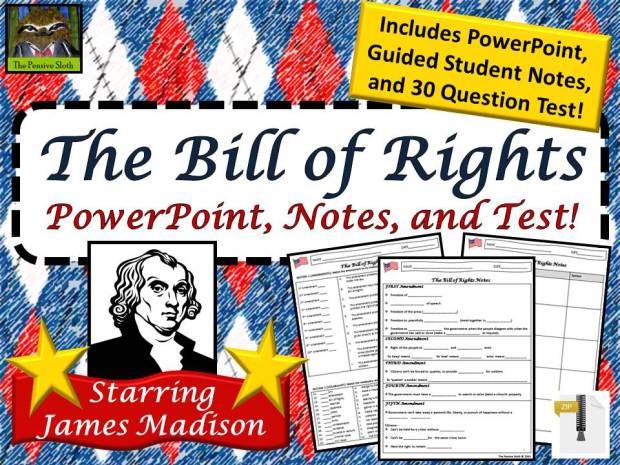
  • Bill of Rights For Kids Mini-Unit–Here’s a mini-unit I put together to help teach the Bill of Rights in kid-friendly language.  It stars James Madison and includes guided notes and a test!
You can find this resource, The Bill of Rights for Kids, in my TPT store.

You can find this resource, The Bill of Rights for Kids, in my TPT store.

Thanks for stopping by!

–The Pensive Sloth
Thinking Maps and Anchor Charts–The Brace Map

I love Thinking Maps! If you haven’t heard of them, a quick search will help you find lots of information. In a nutshell, Thinking Maps are a set of 8 specific graphic organizers based on 8 cognitive skills. They are meant to help students visually represent content based on relationships. The focus of this post will be on The Brace Map.

Brace Maps are used to analyze the structure of whole/part relationships. The Brace Map is quite popular in my classroom.  Here are two ways we have used it this past year!

At the beginning of the year while setting up reading workshop we always discuss genres.  This is a great opportunity for a Brace Map.  You can see we started with genre and categorized it into fiction and non-fiction.  We then took it one step further and broke each of those into parts.

A Brace Map we created at the beginning of the year when learning about different genres.

A Brace Map we created at the beginning of the year when learning about different genres.

Ok, this next one is a little funny.  I have to say that my anchor charts don’t always turn out like those glorious ones you see on Pinterest with all of the color and professional illustrations.  Someday I fully expect to see them on a FAIL meme.  I was not blessed with artistic talents.  Nope.  But this does not stop me in adding illustrations to my anchor charts!  It is important for students to have illustrations to accompany new vocabulary.   ELL students really need these and the brain loves color and novelty, so illustrations are a must!  I don’t pre-make my anchor charts.  We gather together to record our thinking and I’m usually in a hurry to keep up the momentum, so I quickly sketch!  My students and I get a chuckle sometimes (OK, often) at the drawings, it gives them something to look forward to when we meet on the rug, and it lets them know that it is OK to take risks and laugh at your mistakes.  Oh, and we label things a lot so that it is obvious what was drawn there.  Here it is folks…a Brace Map of human body systems that we created during our health unit.

A hilarious anchor chart on human body systems.  We used a Brace Map to sort the whole into parts.

A hilarious anchor chart on human body systems. We used a Brace Map to sort the whole into parts.

I hope you got a chuckle, and perhaps learned a little about how to use Brace Maps in your classroom!

–The Pensive Sloth

CHAMPS–Behavior Management in the Classroom

CHAMPS anchor chart sets  classroom expectations for students in whole group, small group, and independent settings.

CHAMPS anchor chart sets classroom expectations for students in whole group, small group, and independent settings.

Spring break has been fantastic, but it is winding to a close and school will start up again on Monday.  There is always a transition period for students as they return from a long break and get back in the swing of things at school.  We will certainly take some time Monday morning to review our classroom expectations to set students up for success.  Let me tell you a little about CHAMPS.

CHAMPS expectations are taught at the beginning of the year and reviewed often, such as a quick reminder when starting a small group activity or a review when students forget during a whole group lesson.  The expectations help students to know what to do at all times in the classroom.  We even have CHAMPS expectations for the hallway!  Here is what each letter represents:

C is for Conversation–What voice level should students be using during each setting?

H is for Help–How will students get help if they have questions?  Raising hands, asking partners?

A is for Activity–What is the activity expectation, for example are students taking a test or working in a small group on a science lab?

M is for Movement–Are students allowed to get up, sharpen pencils, etc. or should they stay seated?

P is for Participation–What are the expectations for participation?  Should students be commenting one at a time, collaborating with their group, on their own?

S is for Signal–How will the teacher signal that she needs the group’s attention?  Clapping, counting to 3, having students echo, etc.

The big ones for my kiddos are movement and conversation.  You can see in the chart that I have starred movement and added that it should be purposeful, meaning that we don’t need to get up and sharpen each map pencil one at a time or walk around the room to get to a tissue box that was within reach.  We are still working on this one!

What I love about CHAMPS is that it is easy to set up and communicate with students.  Yes there are still rules, rewards, and consequences, but CHAMPS minimizes the need for extensive systems to manage classroom behavior.  I love it!

NOTE:  There are a few variations on this and you have to find what works for your kiddos!  I believe the CHAMPS idea originally came form Safe and Civil Schools and is part of PBS (positive behavior support).  I’m no expert on this, but a little Gooogling will get you more info.

Feel free to comment below if you have questions or would like to share how your classroom systems are set up!

–The Pensive Sloth

Learning About Alternative Energy and Coal Formation

As part of our Earth science unit we spent some time this last six weeks learning about the different types of alternative energy.  Since this is my first year teaching 5th grade science, it had been a long time since I heard the word geothermal!  Students spent some time defining and drawing each type of energy and we made an anchor chart to show what we were learning.

  • goethermal–energy from heat in Earth’s core
  • biofuel/biomass–energy from once living material
  • hydroelectric–energy from moving water (My students have a little song they sing every time I say this word, I think it is part of a commercial they hear on TV all the time!)
  • solar–energy from the sun
  • wind–energy from moving air (wind)
Anchor chart for different types of alternative energy.  (geothermal, hydroelectric, solar, wind, biofuel/biomass)

Anchor chart for different types of alternative energy. (geothermal, hydroelectric, solar, wind, biofuel/biomass) HINT:  Don’t write in yellow!  Write in black and trace over in yellow!

We also spent some time learning about how coal was formed deep in the Earth.

Anchor chart and slide showing formation of coal.

Anchor chart and slide showing formation of coal.

Now, as we prepare for our STAAR test in April, we will be reviewing vocabulary associated with coal formation and alternative energy.  I’ve put together a quick vocabulary review activity for my kiddos that involves cutting, pasting, and matching the words to the definitions and then symbolizing each term.

Vocabulary Snip-it! worksheet to review alternative energy.

Vocabulary Snip-it! worksheet to review alternative energy.  Click below to download the freebie!

You can download a PDF of this Alternative Energy Worksheet or get the Earth Science Vocabulary Snip-its! pack for $1.00 at my TPT store.   The pack contains 4 pages of vocabulary including sedimentary rocks and fossil fuels, fossils, landforms, and alternative energy. Thanks for stopping by and happy teaching!

Here is the almost finished product!  Students match vocabulary terms and symbolize or illustrate each word.   Great review activity for 5th grade science STAAR test!

Here is the almost finished product! Students match vocabulary terms and symbolize or illustrate each word. Great review activity for 5th grade science STAAR test!

#thepensivesloth #teacherproblems meme #teacherhumor ecard covering walls staar

Anchor Chart Attack

OK, so if you live in Texas or another state with a big test…basically anywhere in the US…you know the challenge that anchor charts present.  I love anchor charts!  My students use them.  I don’t spend a ton of time making them pretty, but rather focus on making them meaningful for my kiddos because we create them together.  My challenge is where to put them?  I am self-contained, so I have anchor charts everywhere about everything.  Other than anchor chart overload and running out of space, when the big test comes it all has to come down or be covered.

I am trying something new this year.  I bought a few command hooks, some colorful dollar store clips, and grabbed a few plastic hangers and voila!  My anchor charts are now removable.  I could only get back far enough to see part of the wall where they are hanging, so I’m sorry about the picture.  I’ll work on getting a better one up soon.  Actually, they are hanging on cabinets above student lockers. It’s not perfect, but it should help significantly with hiding all of the learning and help before the big test!

See for yourself: